24 Hours Emergency & Ambulance Service: +977-9801904640
-
-
Heli Rescue: +977-9801904643
-
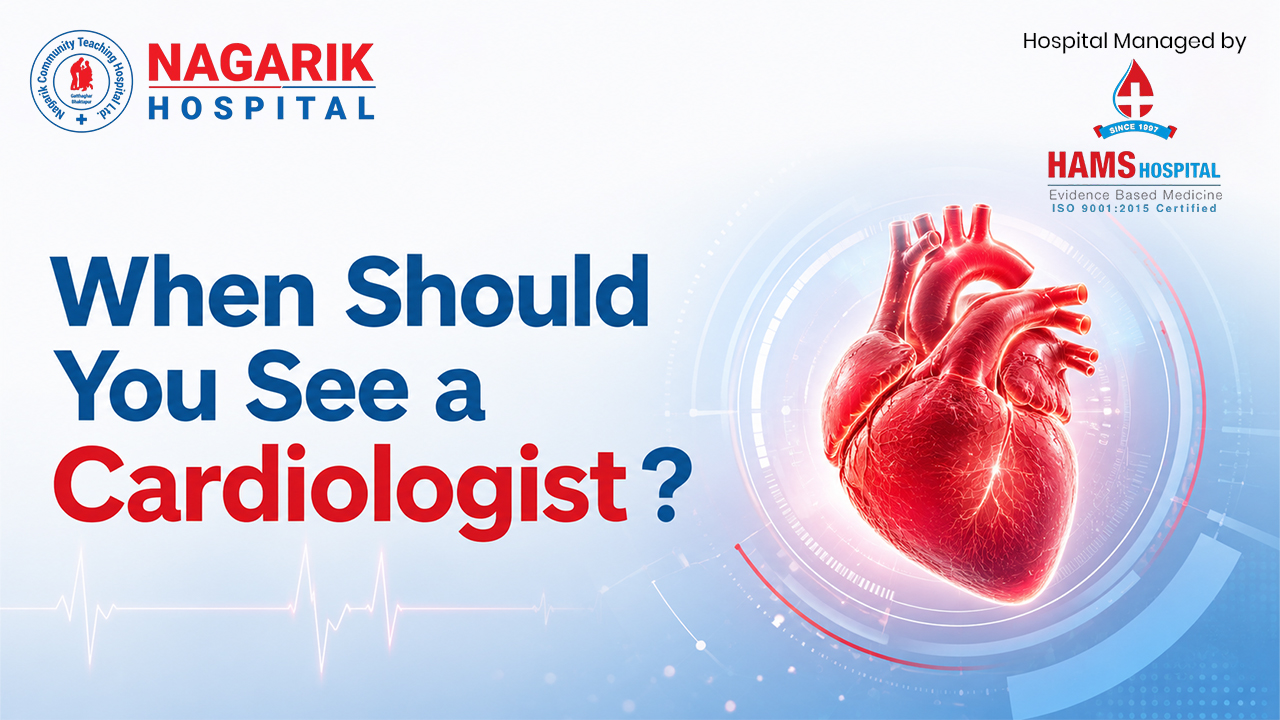
Cardiologist in Bhaktapur
You should see a Cardiologist if you have chest pain, shortness of breath, irregular heartbeat, high blood pressure, high cholesterol, diabetes, fainting, swelling in the legs, or a family history of heart disease. A cardiologist, also called a heart specialist or heart doctor, helps diagnose, treat, and prevent heart problems before they become serious.
Some heart conditions develop silently. Others appear suddenly as emergencies.
Cardiovascular diseases are the leading cause of death globally. WHO reported that an estimated 19.8 million people died from cardiovascular diseases in 2022, representing about 32% of all global deaths. Heart attacks and strokes caused most of these deaths.
This article explains when to visit a cardiologist, which symptoms need urgent care, what tests may be recommended, and how heart risk can be managed.
Medical note: This content is for general health education only. It should not replace consultation, diagnosis, or treatment from a qualified doctor.
A cardiologist is a doctor who specializes in diseases of the heart and blood vessels.
They evaluate symptoms, diagnose heart conditions, manage risk factors, prescribe medicines, recommend lifestyle changes, and refer patients for procedures when needed.
A cardiologist commonly treats:
| Condition | What It Means |
| High blood pressure | Increased pressure in blood vessels |
| High cholesterol | Excess fat-like substances in blood |
| Coronary artery disease | Narrowing of arteries supplying the heart |
| Heart attack | Blocked blood flow to heart muscle |
| Heart failure | Heart cannot pump blood effectively |
| Arrhythmia | Irregular heartbeat |
| Valve disease | Heart valves do not open or close properly |
| Congenital heart disease | Heart problem present from birth |
Nagarik Hospital’s cardiology department lists non-invasive and general cardiology, fetal echocardiology, and interventional cardiology among its services. The department also lists cardiology doctors including Dr. Deewakar Sharma, Dr. Mukunda Sharma, Dr. Kisan Kumar Kushwaha, and Dr. Sutap Yadav.
Many patients use these terms together, but they are not exactly the same.
| Term | Meaning |
| Heart doctor | General term people use for a doctor treating heart problems |
| Cardiologist | Medical specialist who diagnoses and manages heart disease |
| Heart surgeon | Surgeon who performs heart operations |
| Interventional cardiologist | Cardiologist who performs catheter-based procedures such as angioplasty |
A cardiologist usually evaluates the patient first. If surgery is needed, the patient may be referred to a heart surgeon or cardiovascular surgery team.
You should start seeing a cardiologist when you have symptoms of heart disease, abnormal heart test results, uncontrolled risk factors, or a strong family history of early heart disease.
You may also need a preventive heart consultation even before symptoms appear if you have multiple risk factors.
The American Heart Association notes that people aged 40 to 75 who have never had a heart attack should ask about assessing their 10-year risk of a cardiovascular event. It also lists risk factors such as diabetes, high blood pressure, high cholesterol, smoking, obesity, chronic kidney disease, family history, and South Asian ancestry.
| Risk Factor | Why It Matters |
| High blood pressure | Increases heart workload |
| High cholesterol | Can narrow arteries |
| Diabetes | Raises heart disease risk |
| Smoking | Damages blood vessels |
| Obesity | Linked with BP, cholesterol and diabetes |
| Family history | May increase inherited risk |
| Chronic kidney disease | Closely linked with heart disease |
| Previous stroke or heart attack | Requires specialist follow-up |
High blood pressure, high cholesterol, and smoking are key heart disease risk factors. Some risks cannot be controlled, such as age and family history, but many lifestyle-related risks can be improved.
Heart symptoms are not always dramatic. Some people have mild symptoms for weeks or months before they seek care.
You should book a cardiology consultation if you notice:
These symptoms do not always mean heart disease, but they should be evaluated.
Chest pain should be treated seriously, especially if it is new, severe, or associated with breathing difficulty, sweating, nausea, or pain spreading to the arm, jaw, neck, back, or stomach.
The American Heart Association says heart attack warning signs may include chest discomfort, discomfort in the arms, back, neck, jaw or stomach, shortness of breath, cold sweat, nausea, rapid or irregular heartbeat, unusual tiredness, and lightheadedness. It also advises not waiting if warning signs appear.
| Symptom | Why It Matters |
| Chest pressure or squeezing | Common heart attack symptom |
| Pain spreading to left arm, jaw, back, or neck | May suggest heart-related pain |
| Shortness of breath | Can occur with or without chest pain |
| Cold sweating | Can happen during heart attack |
| Fainting or severe dizziness | May suggest rhythm or circulation problem |
| Nausea with chest discomfort | Can be heart-related |
| Sudden weakness or confusion | May suggest stroke or serious circulation issue |
Nagarik Hospital provides 24-hour emergency and ambulance service and is located in Gatthaghar, Bhaktapur. Its about page also describes the hospital as a 100-bedded facility with emergency care, ICU services, trauma care, and multiple specialties.
Four important signs that your heart health may be suffering are:
These symptoms can be linked to conditions such as coronary artery disease, arrhythmia, heart failure, valve disease, or uncontrolled blood pressure.
Shortness of breath, persistent coughing or wheezing, fluid buildup, fatigue, nausea, confusion, increased heart rate, and weight changes among common heart failure signs.
Do not wait for symptoms to become severe. Early evaluation can help identify the cause and guide treatment.
A heart attack can be sudden, but many people experience warning signs first.
Seven possible warning signs include:
Symptoms may vary between men and women. Women may have chest discomfort, but they are also more likely to experience symptoms such as shortness of breath, nausea, vomiting, upset stomach, shoulder/back/arm pain, unusual tiredness, or weakness.
If you suspect a heart attack, seek emergency medical help immediately.
Yes. A cardiologist can help manage cholesterol, especially when cholesterol is high, risk of heart disease is elevated, or the patient already has heart disease, diabetes, high blood pressure, kidney disease, or a family history of early heart problems.
Cholesterol management may include:
CDC explains that LDL cholesterol can cause plaque buildup in arteries, while HDL cholesterol offers some protection. It also states that high blood cholesterol usually has no signs or symptoms, so a lipid profile blood test is needed.
Nagarik Hospital’s comprehensive package includes tests such as ECG, ECHO, glucose fasting, HbA1c, lipid profile, creatinine, chest X-ray, TSH, and physician consultation, which can support preventive health screening.
High cholesterol usually has no obvious warning signs. This is important because many people feel normal even when their cholesterol is high.
High cholesterol typically has no symptoms and a blood test is the way to detect it.
However, very high cholesterol or cholesterol-related artery disease may be associated with certain clues or complications.
| Possible Sign or Clue | What It May Suggest |
| Fatty bumps on skin | Possible very high inherited cholesterol |
| Grayish-white ring around cornea | May occur with familial cholesterol disorders |
| Chest pain | Possible artery narrowing |
| Shortness of breath with activity | Possible heart strain |
| Leg pain while walking | Possible poor circulation |
| Stroke-like symptoms | Possible blocked blood flow to brain |
| Family history of early heart attack | Inherited risk |
| High blood pressure | Often occurs with heart risk |
| Diabetes | Raises heart disease risk |
| Abnormal lipid profile | Direct evidence of cholesterol problem |
Very high inherited cholesterol may cause fatty bumps called xanthomas or grayish-white rings around the cornea, but most people with high LDL cholesterol do not know they have it until blood testing.
So, the safest answer is: do not wait for symptoms. Get cholesterol checked.
Heart failure means the heart is not pumping blood as well as the body needs. It does not always mean the heart has stopped.
Four quiet warning signs may include:
| Sign | What Patients May Notice |
| Shortness of breath | During walking, lying flat, or sleeping |
| Swelling | Feet, ankles, legs, fingers, or abdomen |
| Fatigue | Feeling tired during normal daily activity |
| Persistent cough or fast heartbeat | Coughing, wheezing, racing heart, or palpitations |
People should report symptoms of heart failure to a healthcare professional and ask for a heart evaluation, even if they have not been diagnosed with a heart problem.
Early diagnosis can help manage symptoms and reduce complications.
A cardiologist may recommend tests depending on your symptoms, age, risk factors, and examination findings.
| Test | Why It Is Done |
| Blood pressure measurement | Screens for hypertension |
| ECG | Checks heart rhythm and electrical activity |
| Echocardiography | Uses ultrasound to assess heart structure and pumping |
| Lipid profile | Checks cholesterol and triglycerides |
| Blood sugar / HbA1c | Screens diabetes risk |
| Kidney function test | Important before some medicines or procedures |
| Chest X-ray | Helps evaluate heart size and lungs |
| Stress test | Checks heart function during exertion |
| Holter monitoring | Records rhythm over longer time |
| Angiography | Assesses blocked heart arteries when indicated |
Not every patient needs every test. A heart specialist chooses tests based on clinical need.
Before your appointment, prepare a simple health summary.
Bring or note:
If symptoms are severe or sudden, do not wait for a routine OPD appointment. Visit emergency care.
Many heart problems can be managed better when detected early.
WHO states that most cardiovascular diseases can be prevented by addressing risk factors such as tobacco use, unhealthy diet, obesity, physical inactivity, harmful alcohol use, and air pollution. It also highlights the importance of early detection so counselling and medicines can begin.
Preventive cardiology may help people with:
Small changes, when guided properly, can reduce long-term risk.
For patients around Bhaktapur, Kapan, Kathmandu and throughout Nepal searching for a heart specialist/cardiologist in Bhaktapur, Nagarik Hospital offers cardiology services within a multispeciality hospital setting.
The hospital’s cardiology page lists general cardiology, fetal echocardiology, and interventional cardiology services. It also lists multiple cardiology doctors available through the department page.
Nagarik Hospital is a multispeciality healthcare institution offering emergency care, surgery, cardiology, gynecology, pediatrics, orthopedics, diagnostics, ICU care, and trauma care in Bhaktapur.
This matters because heart symptoms sometimes overlap with lung, kidney, diabetes, neurological, or emergency conditions. A multispeciality setup can help coordinate care when more than one specialist is needed.
Book urgent care or visit emergency if you have:
A cardiology consultation is useful for long-term prevention, but emergency symptoms need immediate medical attention.
You should see a cardiologist when you have symptoms of heart disease, abnormal test results, uncontrolled blood pressure, high cholesterol, diabetes, family history, or reduced ability to exercise.
A heart problem may not always begin with severe pain. It may start as fatigue, breathlessness, palpitations, swelling, dizziness, or mild chest discomfort.
For people in Bhaktapur, consulting a qualified heart doctor early can help identify risks, manage disease, and prevent complications. If symptoms are sudden or severe, visit emergency care instead of waiting for an OPD appointment.
Someone should start seeing a cardiologist if they have chest pain, shortness of breath, palpitations, fainting, high blood pressure, high cholesterol, diabetes, abnormal ECG, or a family history of early heart disease.
Four warning signs are chest discomfort, shortness of breath, irregular heartbeat, and swelling or unusual fatigue. These may suggest heart disease, rhythm problems, or heart failure.
Seven possible heart attack warning signs are chest pressure, arm pain, back or jaw pain, shortness of breath, cold sweat, nausea or vomiting, and lightheadedness or unusual fatigue.
Yes. A cardiologist manages cholesterol when it increases heart disease risk. They may recommend a lipid profile, lifestyle changes, medicines, and follow-up based on your overall heart risk.
High cholesterol usually has no symptoms. Possible clues or related complications include fatty skin bumps, gray-white eye ring, chest pain, leg pain while walking, shortness of breath, stroke-like symptoms, family history, high blood pressure, diabetes, and an abnormal lipid profile.
Four possible signs of heart failure are shortness of breath, swelling in the legs or abdomen, ongoing fatigue, and persistent cough or fast heartbeat. These symptoms need medical evaluation.
Nagarik Community Teaching Hospital is a multispeciality hospital in Gatthaghar, Bhaktapur, Nepal. The hospital provides emergency care, cardiology, diagnostics, ICU care, and specialist services. This article is for patient education and was reviewed by a qualified cardiologist before publishing.