24 Hours Emergency & Ambulance Service: +977-9801904640
-
-
Heli Rescue: +977-9801904643
-
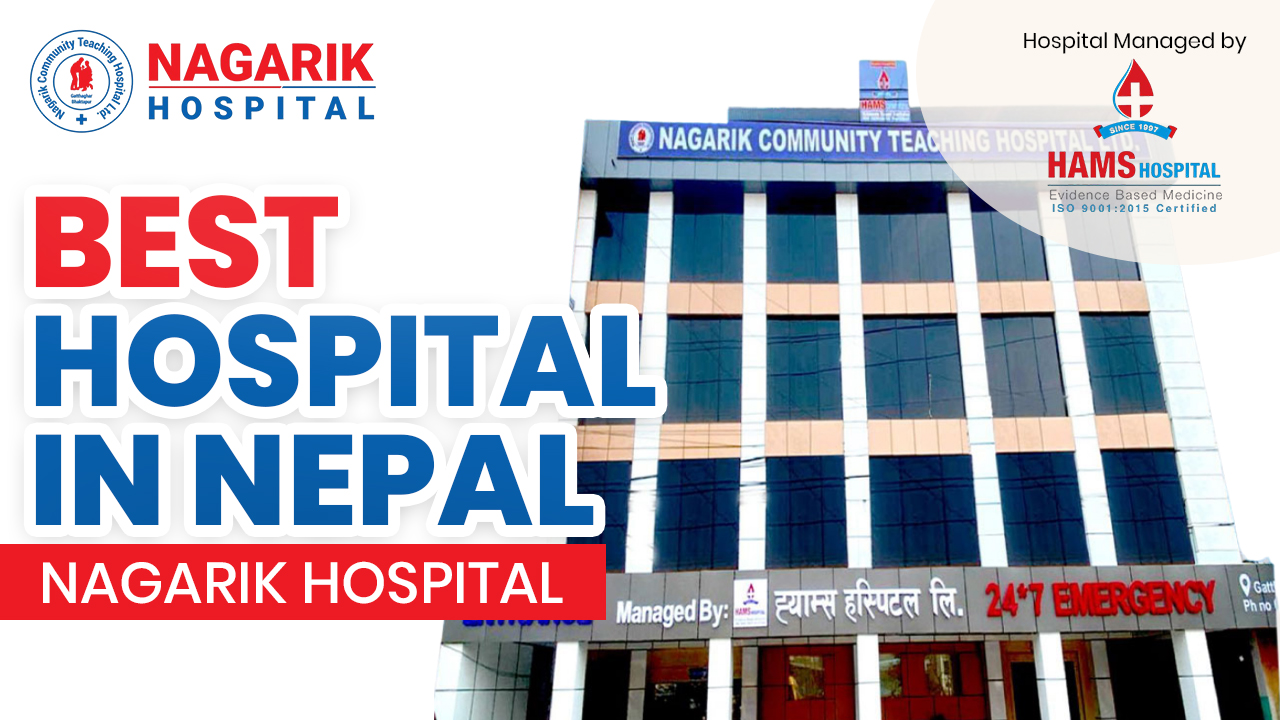
When people search for the best hospital in Nepal, they are usually not looking for a simple list. They want a hospital that is safe, reliable, accessible, and capable of handling the health problem they or their family member is facing.
A good hospital should provide qualified doctors, emergency support, diagnostic services, critical care, transparent communication, and patient-centered treatment. For people searching for a hospital in Bhaktapur or a reliable hospital near Kathmandu Valley, Nagarik Community Teaching Hospital is one of the important multispeciality options to consider.
Nagarik Hospital is located in Gatthaghar, Bhaktapur, and describes itself as a 100 bedded community teaching hospital with emergency care, ICU, trauma care, clinical departments, and medical education services.
The best hospital in Nepal should offer safe care, experienced doctors, 24-hour emergency service, ICU support, diagnostic facilities, clear communication, ethical treatment, and access to multiple specialties under one roof.
For patients in Kathmandu Valley, location also matters. A hospital that is easy to reach from Kathmandu, Bhaktapur, Lalitpur, and nearby districts can be helpful during emergencies, follow-ups, surgery planning, and long-term treatment.
Nagarik Hospital highlights emergency medical service, road and air ambulance support, ICU care, trauma care, advanced technology, and multiple clinical departments on its official website.
Healthcare decisions are high-stakes. A delayed diagnosis, poor communication, or lack of emergency readiness can affect treatment outcomes.
The World Health Organization notes that quality and safety in health services are essential for public trust and timely care-seeking. WHO also reports that poor-quality care contributes significantly to preventable deaths from conditions that should be treatable through healthcare.
This is why patients should not choose a hospital only by popularity, advertisements, or distance. They should look at clinical capability, emergency readiness, doctor availability, patient safety systems, and continuity of care.
A good hospital is not only where treatment begins. It is where patients are properly assessed, monitored, referred when needed, and supported throughout recovery.
The phrase best hospital in Nepal should be understood carefully. No single hospital is best for every condition, every patient, or every emergency.
A heart patient may need cardiology and ICU support. A trauma patient may need emergency, orthopedics, surgery, radiology, and critical care. A child may need pediatric specialists. A cancer patient may need oncology, surgery, pathology, imaging, and long-term follow-up.
Here are the key qualities that help patients judge a hospital more realistically.
| Quality Factor | Why It Matters |
| 24-hour emergency care | Helps during accidents, sudden illness, and critical symptoms |
| Qualified doctors | Supports accurate diagnosis and treatment |
| ICU and critical care | Needed for serious, unstable, or post-surgery patients |
| Diagnostic services | Lab and imaging help confirm diagnosis faster |
| Multispeciality departments | Reduces the need to visit multiple hospitals |
| Transparent communication | Helps families understand treatment decisions |
| Infection control and safety | Reduces preventable harm |
| Accessibility | Saves time during emergencies and follow-ups |
| Follow-up care | Supports recovery and long-term health |
| Ethical care | Builds trust between patient and provider |
Patients should match the hospital’s strengths with their actual health needs.
Emergency care is one of the clearest ways to evaluate a hospital. In urgent situations, minutes matter.
A strong emergency department should be able to handle:
Nagarik Hospital states that it provides 24-hour emergency and ambulance service, with separate emergency contact support and heli rescue information listed on its website.
For people comparing a hospital in Kathmandu and a hospital in Bhaktapur, emergency access should be judged by both distance and readiness. The nearest hospital is useful only when it can provide appropriate initial care.
ICU care is important for patients who need close monitoring, breathing support, advanced medicines, or post-operative observation.
Patients may need ICU care after:
Nagarik Hospital states that it is a 100-bedded hospital with Level 3 ICU service, critical care trained specialists, and Level 1 trauma care in Bhaktapur.
For families, ICU availability can reduce delays in care. It also allows doctors to monitor serious patients more closely and coordinate with other departments when needed.
A multispeciality hospital brings different departments together so patients can receive coordinated care.
This is important because many illnesses are not limited to one body system. A diabetic patient may need endocrinology, nephrology, cardiology, eye care, nutrition, and wound care. A trauma patient may need emergency medicine, orthopedics, surgery, ICU, radiology, and physiotherapy.
Nagarik Hospital lists departments such as cardiology, dermatology, endocrinology, ENT, gastroenterology, general/GI surgery, gynecology, internal medicine, maxillofacial surgery, nephrology, neurology, neurosurgery, oncology, ophthalmology, orthopedics and trauma, pathology, pediatrics, physiotherapy, pulmonary and critical care, radiology, and urology.
This type of departmental range is one reason patients may prefer a multispeciality hospital instead of visiting separate clinics for every concern.
Many patients search for a hospital in Kathmandu because Kathmandu has many well-known medical centers. However, patients living in Bhaktapur, Madhyapur Thimi, Suryabinayak, Sallaghari, Kausaltar, Gatthaghar, and nearby areas may benefit from choosing a capable hospital in Bhaktapur.
The right choice depends on the condition, urgency, travel time, specialist availability, and patient comfort.
| Factor | Hospital in Bhaktapur | Hospital in Kathmandu |
| Travel time for Bhaktapur residents | Often shorter | May take longer in traffic |
| Emergency access | Useful for nearby communities | Depends on distance and traffic |
| Follow-up convenience | Easier for local patients | Can be tiring for repeated visits |
| Specialist availability | Depends on hospital | Varies by hospital |
| Family support | Easier if family lives nearby | May require more travel |
| Best choice | When services match the need | When a specific specialist or facility is needed |
Nagarik Hospital is located in Gatthaghar, Bhaktapur, which makes it a practical option for people in eastern Kathmandu Valley seeking a multispeciality hospital closer to home.
A high-quality hospital should not only treat emergencies. It should also support diagnosis, treatment planning, surgery, recovery, prevention, and follow-up.
Here is a practical checklist for patients.
| Service Area | What to Check |
| Emergency | Is emergency care available 24/7? |
| Ambulance | Is ambulance support available? |
| ICU | Are critical care beds and trained staff available? |
| Doctors | Are specialists available for the condition? |
| Diagnostics | Are lab, pathology, and radiology services available? |
| Surgery | Are operation theatre and surgical teams available? |
| Pharmacy | Can essential medicines be accessed quickly? |
| Nursing | Are trained nurses available for monitoring? |
| Infection prevention | Are hygiene and safety practices followed? |
| Communication | Do doctors explain diagnosis, risk, and treatment options? |
Patients should ask these questions before planned treatment and during non-emergency visits.
Patient-centered care means patients are not treated like case numbers. Their symptoms, fears, family situation, treatment goals, and financial concerns should be heard.
Nagarik Hospital describes its approach as high-quality, patient-centered healthcare with compassion and expertise. Its website also highlights “Talent, Technology, and Touch,” referring to doctors, technology, and compassionate patient interaction.
This matters because medical care can feel stressful. Clear communication helps patients understand what is happening, why tests are needed, what treatment options exist, and what risks should be considered.
A hospital that listens well can improve trust and reduce confusion during difficult moments.
Teaching hospitals often serve two roles. They provide patient care and support medical education.
Nagarik Community Teaching Hospital describes itself as both a healthcare facility and a teaching institution in Madhyapur Thimi, Nepal.
A teaching environment can support structured learning, multidisciplinary discussion, and professional development. For patients, what matters most is that care remains supervised, ethical, safe, and guided by qualified clinicians.
Patients can ask who is involved in their care, who the responsible consultant is, and how decisions are being made.
The best hospital for one patient may not be the best hospital for another. Start with the problem you need help with.
Choose the nearest capable emergency hospital. Do not delay care for chest pain, breathing difficulty, stroke symptoms, severe bleeding, unconsciousness, severe injury, or serious allergic reaction.
Nagarik Hospital lists pre-hospital care and emergency medicine among its departments and describes it as fast, lifesaving care before or upon hospital arrival.
For diabetes, blood pressure, kidney disease, thyroid disease, asthma, heart disease, and arthritis, choose a hospital with specialist follow-up and diagnostic support.
Nagarik Hospital lists internal medicine, endocrinology and metabolism, nephrology, cardiology, pulmonary care, and rheumatology among its departments.
Choose a hospital that has trained surgeons, anesthesia support, operation theatre facilities, ICU backup, lab and radiology services, and post-operative nursing care.
Nagarik Hospital lists general/GI surgery, neurosurgery, maxillofacial surgery, orthopedics and trauma, thoracic, breast and thyroid surgery, pediatric surgery, and urology among its departments.
Look for gynecology services, emergency readiness, ultrasound or imaging access, lab testing, and safe referral pathways.
Nagarik Hospital lists gynecology as a department providing reproductive health services, screenings, treatments, and surgical care.
Children need age-appropriate care, pediatric assessment, medication dosing, and family communication.
Nagarik Hospital lists pediatrics and pediatric surgery among its departments.
Some symptoms should never be managed only at home.
Go to emergency care if you or someone nearby has:
| Symptom | Possible Concern |
| Chest pain or pressure | Heart-related emergency |
| Sudden weakness on one side | Possible stroke |
| Severe breathing difficulty | Lung or heart emergency |
| Loss of consciousness | Neurological, cardiac, or metabolic issue |
| Severe injury or bleeding | Trauma emergency |
| High fever with confusion | Severe infection risk |
| Severe abdominal pain | Surgical or medical emergency |
| Seizure | Neurological emergency |
| Severe allergic reaction | Anaphylaxis risk |
| Pregnancy bleeding or severe pain | Obstetric emergency |
In these situations, do not spend too much time comparing hospitals online. Seek urgent medical care.
Families often need a hospital that can care for different age groups and different conditions.
A family may need pediatrics for a child, gynecology for a mother, cardiology for a parent, orthopedics for injury, and internal medicine for chronic disease.
A good family hospital should offer:
Nagarik Hospital’s broad department list makes it relevant for families seeking multispeciality care in Bhaktapur and nearby Kathmandu Valley areas.
Doctors need accurate information to make safe decisions. Symptoms alone are not always enough.
Diagnostic services may include:
Nagarik Hospital lists pathology and radiology departments. Pathology analyzes body tissues and fluids for disease detection, diagnosis, and monitoring, while radiology uses imaging techniques to diagnose diseases and guide procedures safely.
Good diagnostics can reduce guesswork and help doctors decide whether a patient needs medicine, surgery, ICU care, referral, or follow-up.
Patient safety is one of the most important parts of hospital quality.
It includes:
WHO emphasizes that improving healthcare quality and safety includes basics such as water, sanitation, waste disposal, health worker capacity, policy, management, and patient engagement.
Patients and families can also support safety by sharing complete medical history, allergies, current medicines, previous surgeries, and test reports.
For non-emergency care, ask these questions before admission or procedure planning.
| Question | Why It Helps |
| Which doctor will manage my case? | Clarifies responsibility |
| What is the diagnosis or suspected diagnosis? | Helps you understand the condition |
| What tests are needed and why? | Avoids confusion |
| What are the treatment options? | Supports informed decisions |
| What are the risks and benefits? | Improves consent quality |
| Is ICU backup available if needed? | Important for surgery or serious illness |
| What will follow-up involve? | Helps plan recovery |
| What costs should we expect? | Supports financial planning |
| When should we return urgently? | Improves safety after discharge |
A hospital that answers these clearly is usually easier to trust.
Kathmandu Valley traffic can affect emergency care, follow-up visits, and family support.
Patients often search for a hospital in Kathmandu because many major services are located there. But for people living in Bhaktapur and eastern parts of the valley, a nearby multispeciality hospital in Bhaktapur can reduce travel time and stress.
Nagarik Hospital’s Gatthaghar location can be practical for residents of Bhaktapur, Madhyapur Thimi, Sallaghari, Kausaltar, Suryabinayak, and nearby areas who need hospital care closer to home.
For emergencies, the best hospital is often the nearest capable hospital that can stabilize and treat the patient.
The best hospital in Nepal is one that matches your medical needs and provides safe, timely, specialist-led care. Look for 24-hour emergency service, ICU support, qualified doctors, diagnostics, surgical backup, infection control, and transparent communication. For patients in Bhaktapur and eastern Kathmandu Valley, Nagarik Community Teaching Hospital is a multispeciality option with emergency, ICU, trauma, ambulance, and multiple clinical departments.
Nagarik Hospital is relevant for people searching for the best hospital in Nepal, especially when they want a multispeciality hospital in Bhaktapur with access to emergency and critical care.
Key strengths listed on its official website include:
| Nagarik Hospital Feature | Patient Benefit |
| 100-bedded hospital | Supports inpatient care |
| 24-hour emergency service | Helps during urgent illness or injury |
| EMS and prehospital care | Supports emergency response |
| Road and air ambulance information | Useful for critical transfers |
| Level 3 ICU service | Supports serious patients |
| Level 1 trauma care | Important for injuries and accidents |
| Multiple departments | Reduces need to visit different centers |
| Teaching hospital role | Supports medical education and structured care |
| Location in Gatthaghar, Bhaktapur | Convenient for eastern Kathmandu Valley |
These features should be presented honestly. They do not mean one hospital is perfect for every case, but they do show why Nagarik Hospital is a practical option for many patients in Bhaktapur and nearby areas.
Look for 24-hour emergency care, qualified doctors, ICU support, diagnostic services, surgical backup, infection control, transparent communication, and specialist availability for your condition.
Yes. Nagarik Community Teaching Hospital is located in Gatthaghar, Bhaktapur, Nepal.
Yes. While Nagarik Hospital is located in Bhaktapur, it can be useful for patients in the wider Kathmandu Valley, especially those living near eastern Kathmandu, Madhyapur Thimi, Kausaltar, and Bhaktapur.
Yes. Nagarik Hospital lists 24-hour emergency and ambulance service on its website. It also lists emergency medical service and road and air ambulance support.
Nagarik Hospital states that it has Level 3 ICU service with critical care trained specialists.
Nagarik Hospital lists departments including cardiology, endocrinology, ENT, gastroenterology, gynecology, internal medicine, nephrology, neurology, neurosurgery, oncology, orthopedics and trauma, pediatrics, physiotherapy, pulmonary and critical care, radiology, and urology.
Go immediately for chest pain, breathing difficulty, stroke-like symptoms, severe injury, unconsciousness, severe bleeding, seizure, severe abdominal pain, or pregnancy-related emergency symptoms.
In emergencies, a nearby capable hospital is often better because delays can be dangerous. For planned treatment, patients can compare specialists, facilities, cost, location, and follow-up needs.
Patient safety reduces preventable harm, improves trust, and supports better outcomes. WHO emphasizes that quality and safety are essential for effective healthcare services.
Nagarik Hospital lists appointment options on its website and provides its general phone number as +97716637700. It also lists emergency and ambulance contact information separately.
Searching for the best hospital in Nepal should not be about finding the biggest name only. It should be about finding the right hospital for your condition, location, urgency, and treatment needs.
A dependable hospital should provide emergency readiness, qualified doctors, ICU support, diagnostics, multispeciality care, patient safety, and clear communication.
For people looking for a hospital in Bhaktapur or a reliable option near Kathmandu Valley, Nagarik Community Teaching Hospital offers a multispeciality setup in Gatthaghar, Bhaktapur, with emergency services, ICU, trauma care, ambulance support, and a wide range of departments.
The right hospital is the one that can assess you properly, treat you safely, communicate clearly, and guide you through recovery with care and responsibility.