24 Hours Emergency & Ambulance Service: +977-9801904640
-
-
Heli Rescue: +977-9801904643
-
Chest pain can come from the heart, lungs, stomach, muscles, ribs, anxiety, or other conditions. Some causes are mild, but chest discomfort can also be a warning sign of a heart attack or another emergency. The safest first step is to treat new, severe, or unexplained pain seriously and get medical evaluation quickly.
A common chest pain cause is reduced blood flow to the heart, known as angina. But not every pain in the chest is cardiac. Correct chest pain treatment depends on the exact cause, symptoms, risk factors, and test results.
Globally, cardiovascular diseases remain the leading cause of death. WHO reported that cardiovascular diseases caused about 19.8 million deaths in 2022, around 32% of all global deaths.
Chest pain may be serious when it feels like pressure, squeezing, tightness, heaviness, or crushing discomfort, especially if it spreads to the arm, shoulder, back, neck, jaw, or upper abdomen.
It also needs urgent care when it comes with shortness of breath, sweating, nausea, faintness, fast heartbeat, weakness, or sudden severe discomfort. Mayo Clinic mentioned these as possible heart-related chest pain symptoms.
Emergency signs include:
| Warning Sign | Why It Matters |
| Chest pressure lasting more than a few minutes | Possible heart attack |
| Pain spreading to arm, jaw, neck, back or upper belly | Common heart-related pattern |
| Shortness of breath | May involve heart or lungs |
| Cold sweat, nausea, lightheadedness | Possible cardiac warning sign |
| Sudden severe tearing pain | Possible major blood vessel emergency |
| Chest pain with fainting | Needs urgent assessment |
| Chest pain after exertion | May suggest angina |
| Chest pain with low oxygen, coughing blood, or severe breathing trouble | Possible lung emergency |
For new or sudden chest pain, emergency medical help is recommended because serious conditions such as heart attack can cause chest pain.
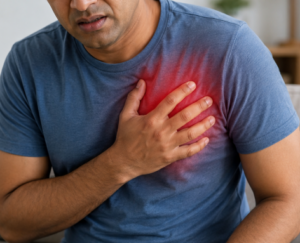
Chest discomfort is not always sharp pain. Many people describe it as:
Heart related pain is often described as pressure, tightness, squeezing, or heaviness. It may spread beyond the chest and may come with sweating, nausea, fatigue, shortness of breath, or lightheadedness.
Some people, especially older adults, people with diabetes, and women, may have less typical symptoms. The American Heart Association notes that women may experience chest discomfort along with shortness of breath, nausea, lightheadedness, cold sweat, or pain in the arms, back, neck, jaw, or stomach.
Chest pain has many possible causes. The cause may be cardiac, respiratory, digestive, muscular, nerve-related, or stress-related.
A heart attack happens when blood flow to part of the heart muscle is blocked. Chest discomfort is the most common symptom, but it may not always look dramatic.
The pain may feel like pressure, squeezing, heaviness, or discomfort in the center or left side of the chest. It may last more than a few minutes or come and go. NHLBI notes that symptoms can include chest discomfort, pain in the arm, back, shoulder, neck, jaw, or upper abdomen, shortness of breath, sweating, unusual tiredness, and nausea.
A heart attack is a medical emergency. Do not wait to see whether severe symptoms disappear.
Angina is chest pain or discomfort caused when the heart muscle does not get enough oxygen-rich blood. It is usually related to coronary artery disease.
Angina often happens when the heart needs more oxygen, such as during physical activity, emotional stress, or when blood flow is reduced by narrowed arteries.
Stable angina often follows a pattern. It may occur with exertion and improve with rest or prescribed medicine.
Unstable angina is more dangerous. It may happen at rest, last longer, feel worse than usual, or not improve as expected. It needs urgent medical evaluation.
Acid reflux can cause burning chest discomfort, sour taste, burping, throat irritation, or pain after meals. It may feel like heart pain, especially when the discomfort is central.
However, do not assume chest burning is only acidity if it is new, severe, exertional, or associated with breathlessness, sweating, or radiating pain.
Chest wall pain can happen after heavy lifting, coughing, injury, exercise, poor posture, or muscle strain. It may worsen when pressing on the area, twisting, taking a deep breath, or moving the arms.
This type is often less dangerous, but it still needs evaluation when the pain is new, persistent, unexplained, or severe.
Lung problems can cause sharp pain, especially with breathing or coughing. Possible causes include pneumonia, pleurisy, asthma flare, collapsed lung, or pulmonary embolism.
A pulmonary embolism is a blood clot in the lung and can be serious. Chest pain with sudden breathlessness, coughing blood, fainting, or fast heartbeat needs urgent care.
Anxiety and panic attacks can cause chest tightness, fast heartbeat, sweating, trembling, shortness of breath, and fear. These symptoms can feel similar to heart problems.
A first episode of chest pain should not be self-diagnosed as anxiety. Heart and lung causes should be ruled out when symptoms are intense, new, or unclear.
Other causes include shingles, gallbladder disease, gastritis, esophageal spasm, pericarditis, myocarditis, rib injury, and nerve pain.
Chest pain can be grouped into cardiac causes such as acute coronary syndrome and angina, as well as non-cardiac causes from other body systems.
The table below can help understand patterns, but it cannot diagnose the cause.
| Feature | More Suggestive of Heart-Related Pain | More Suggestive of Non-Heart Pain |
| Feeling | Pressure, squeezing, heaviness | Sharp, burning, localized, tender |
| Trigger | Walking, climbing stairs, stress | Movement, deep breath, meals, posture |
| Spread | Arm, jaw, neck, back, upper belly | Usually stays in one spot |
| Associated symptoms | Sweating, nausea, breathlessness, faintness | Burping, sour taste, muscle tenderness |
| Relief | Rest may help angina | Antacid, posture change, or muscle rest may help |
| Risk | Higher with diabetes, hypertension, smoking, cholesterol, family history | Can occur at any age |
Important: heart pain can sometimes feel like indigestion, fatigue, or breathlessness rather than obvious pain. Heart attacks may begin with subtle symptoms and should not be ignored.
Chest pain treatment starts with finding out whether the condition is urgent. A hospital in Nepal with emergency and cardiology support may begin with quick assessment and basic tests.
| Test or Check | Purpose |
| Blood pressure, pulse, oxygen level | Checks immediate stability |
| ECG | Looks for heart rhythm or heart attack changes |
| Blood tests such as cardiac enzymes | Helps detect heart muscle injury |
| Chest X-ray | Checks lungs, heart size, infection, fluid, injury |
| Echocardiography | Evaluates heart pumping and valves |
| Blood sugar and kidney function tests | Checks risk and treatment safety |
| CT scan or other imaging | Used when lung clot, aorta problem, or other cause is suspected |
The 2021 AHA/ACC chest pain guideline notes that chest pain is the dominant and most frequent symptom in both men and women diagnosed with acute coronary syndrome.
| Cause | Treatment Direction |
| Heart attack | Emergency cardiac treatment, medicines, possible procedure |
| Angina | Heart medicines, risk control, further cardiac testing |
| Acid reflux | Diet changes, acid-reducing medicine, evaluation when needed |
| Muscle strain | Rest, pain control, posture and activity guidance |
| Pneumonia | Infection treatment and breathing support if needed |
| Pulmonary embolism | Emergency clot treatment |
| Anxiety-related symptoms | Medical evaluation first, then stress and mental health care |
| Pericarditis or myocarditis | Cardiology evaluation and cause-specific treatment |
Do not take random medicines for chest pain without medical advice. Some medicines may be unsafe depending on age, blood pressure, bleeding risk, pregnancy, allergies, or other illnesses.
Chest discomfort deserves extra attention when a person has:
Cardiovascular deaths are more common in low- and middle-income countries; WHO reports that more than three-quarters of cardiovascular deaths occur in these countries.
A “weak heart” usually refers to heart failure or reduced pumping ability. The early symptoms may be subtle.
Common signs include shortness of breath during activity, tiredness, swelling in the feet or ankles, fast heartbeat, reduced exercise capacity, nighttime breathlessness, persistent cough, or sudden weight gain from fluid buildup.
The American Heart Association lists shortness of breath, swelling, tiredness, persistent coughing or wheezing, lack of appetite, confusion, increased heart rate, and weight changes as heart failure signs and symptoms.
Chest pain can happen in some people with heart failure, especially when coronary artery disease is also present. But heart failure may also occur without chest pain.
Heart failure is commonly staged as A, B, C, and D rather than 1, 2, 3, and 4.
What many people call “Stage 1” usually matches Stage A. This means a person is at risk of heart failure but does not yet have structural heart disease or symptoms.
Stage A risk factors include high blood pressure, diabetes, obesity, cardiovascular disease, exposure to heart-damaging medicines, or family history of cardiomyopathy.
The goal at this stage is prevention: control blood pressure, manage diabetes, improve cholesterol, stop smoking, maintain healthy activity, and follow medical advice.
Chest pain should be evaluated promptly when it is new, worsening, repeated, or linked with exertion. A cardiology hospital in Nepal can help assess whether the discomfort is related to the heart, lungs, digestion, muscles, or another cause.
Nagarik Hospital has a cardiology department page describing heart-related diagnostic tests, treatment, and preventive care for patients in Bhaktapur and across Nepal.
Medical review is especially important for patients with diabetes, hypertension, high cholesterol, smoking history, kidney disease, family history of heart disease, or previous heart problems.
For sudden, severe, or unexplained chest pain:
For mild, brief, familiar pain that clearly relates to muscle strain or acidity, medical review is still sensible if symptoms recur, worsen, or feel different from usual.
Not all chest pain can be prevented, but heart-related risk can often be reduced.
Helpful steps include:
Prevention is especially important because angina and heart attack often develop from long-term narrowing of heart arteries.
Five common causes are heart attack, angina, acid reflux, muscle strain, and lung problems such as pneumonia or pulmonary embolism.
Chest pain is treated by treating the cause. Heart-related pain needs urgent medical care, while reflux, muscle strain, infection, or anxiety-related pain need different treatments.
Chest pain is serious if it feels heavy, squeezing, or pressure-like; lasts more than a few minutes; spreads to the arm, jaw, neck, back, or upper abdomen; or comes with breathlessness, sweating, nausea, faintness, or weakness.
A practical way to group chest pain is cardiac pain, lung-related pain, digestive pain, and muscle or rib-related pain.
Pain that is brief, mild, clearly linked to muscle movement, improves quickly, and has no warning symptoms is often less serious. But new or unexplained chest pain should be checked.
Early signs may include shortness of breath, fatigue, swelling in the feet or ankles, fast heartbeat, reduced exercise tolerance, persistent cough, or sudden weight gain from fluid.
“Stage 1” usually refers to Stage A heart failure risk. This means a person has risk factors but no heart failure symptoms or structural heart disease.
Warning clues include chest pressure, breathlessness, fainting, palpitations, swelling, unusual fatigue, pain with exertion, or discomfort spreading to the arm, jaw, neck, or back. Medical tests such as ECG, blood tests, and echocardiography may be needed.
Chest pain can occur in people with heart failure, especially when coronary artery disease is present. However, common heart failure symptoms are breathlessness, fatigue, swelling, fast heartbeat, cough, and reduced activity tolerance.
Chest pain should never be ignored when it is new, severe, repeated, or associated with breathlessness, sweating, nausea, faintness, or pain spreading to the arm, jaw, neck, back, or upper abdomen.
The cause may be heart-related, lung-related, digestive, muscular, or stress-related. Because symptoms can overlap, the safest approach is timely medical evaluation and cause-specific treatment.
A cardiology focused evaluation helps identify urgent heart conditions, guide treatment, and reduce future risk through prevention, medicines, lifestyle care, and follow-up.
Written by: Nagarik Hospital Health Education Team
This article is for health education and should be medically reviewed before publication. It does not replace diagnosis, emergency care, or treatment from a qualified healthcare professional.