24 Hours Emergency & Ambulance Service: +977-9801904640
-
-
Heli Rescue: +977-9801904643
-
The Dermatology Department at Nagarik Community Teaching Hospital provides diagnosis, treatment and ongoing care for common and complex conditions related to the skin, hair, nails and mucous membranes. Our dermatology services are designed for patients of all age groups who need medical advice for skin disease, hair problems, nail disorders, allergies, infections or cosmetic skin concerns.
Skin conditions can affect daily comfort, confidence and overall health. Some problems may look simple in the beginning but can become long-term if not evaluated properly. A consultation with a dermatologist helps identify the cause of the problem and choose the right treatment plan based on the patient’s condition, skin type, age, medical history and lifestyle.
At Nagarik Hospital, the Dermatology Department focuses on clear diagnosis, evidence-based treatment and patient education so that individuals can better understand their condition and take care of their skin, hair and nails safely.
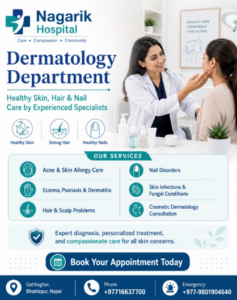
The department provides care for a wide range of dermatological conditions, including general skin diseases, hair and scalp problems, nail conditions, allergic skin reactions, infections and cosmetic dermatology concerns.
Patients commonly visit a dermatologist for itching, rashes, redness, swelling, pigmentation, dryness, skin infection or sudden changes in the skin. Proper examination helps identify whether the condition is caused by allergy, infection, inflammation, sun exposure, hormonal changes or another medical reason.
Common skin conditions treated by dermatologists include:
Acne is one of the most common reasons people search for dermatology services. It may appear as pimples, blackheads, whiteheads, painful bumps or acne marks. Acne can be related to hormones, oily skin, blocked pores, bacteria, stress, cosmetic products or lifestyle factors.
A dermatologist can help assess the severity of acne and recommend suitable treatment. Early and proper care can reduce the risk of acne scars, dark spots and repeated breakouts. Patients are also guided on skin care habits, product use and follow-up care.
Hair fall and scalp problems can happen due to many reasons, including genetics, dandruff, infection, stress, nutritional deficiency, hormonal changes, illness or improper hair care. The Dermatology Department evaluates the possible cause before suggesting treatment.
Common hair and scalp concerns include:
The goal of treatment is to identify the underlying cause and support healthy scalp and hair care.
Nail changes can sometimes be related to infection, injury, skin disease or internal health conditions. Patients should consult a dermatologist if they notice persistent nail discoloration, thickening, pain, swelling, separation of the nail, brittle nails or fungal changes.
Common nail concerns include:
Skin allergies and infections are common in Nepal due to weather changes, dust, pollution, sweating, cosmetics, food reactions, insect bites, medicines or contact with irritating substances. Symptoms may include itching, redness, swelling, burning, rash, scaling or fluid-filled lesions.
Dermatology consultation helps differentiate between allergy, fungal infection, bacterial infection, viral infection or inflammatory skin disease. Correct diagnosis is important because the treatment for each condition is different.
Some patients visit the Dermatology Department for cosmetic skin concerns such as pigmentation, acne marks, uneven skin tone, premature aging, scars or unwanted skin growths. Cosmetic dermatology focuses on improving skin appearance while keeping safety and medical suitability in mind.
Patients are advised to avoid self-medication, harsh skin products or unverified cosmetic treatments. A dermatologist can recommend appropriate care based on skin type and clinical condition.
You should consider visiting a dermatologist if you have:
Early consultation can help prevent complications and reduce unnecessary use of medicines or creams.
Nagarik Community Teaching Hospital provides dermatology care as part of its multispeciality healthcare services. The department is supported by experienced dermatology doctors, hospital-based diagnostic support and a patient-focused care environment.
Patients looking for a dermatology hospital in Nepal, a skin specialist in Nepal, or dermatology services near Bhaktapur can visit Nagarik Hospital for consultation and treatment planning.
The hospital’s location in Gatthaghar, Bhaktapur makes it accessible for patients from Bhaktapur, Kathmandu Valley and surrounding areas.
The Dermatology Department at Nagarik Hospital includes dermatology doctors who provide consultation for skin, hair and nail conditions.
You may book an appointment with the Dermatology Department for evaluation, diagnosis and treatment advice.
Suggested CTA button text:
Book Dermatology Appointment
To help the dermatologist understand your condition better, you can bring or remember the following details:
Avoid applying strong creams or self-prescribed medicine before consultation unless already advised by a doctor.
A dermatologist treats conditions related to the skin, hair, nails and related allergies or infections. This includes acne, eczema, psoriasis, fungal infections, hair fall, dandruff, nail disorders, pigmentation and many other skin concerns.
You should visit a dermatologist if a skin, hair or nail problem is painful, spreading, recurring, not improving with basic care or affecting your daily comfort. Sudden changes in the skin should also be checked by a doctor.
Yes, Nagarik Hospital provides dermatology services for skin, hair and nail problems through its Dermatology Department.
Yes. A dermatologist can evaluate the type and severity of acne and recommend suitable treatment. Proper acne care can also help reduce the risk of scars and dark spots.
Yes. Dermatologists evaluate hair fall and scalp problems to identify possible causes such as dandruff, infection, genetics, stress, hormonal changes or nutritional issues.
No. Dermatology includes both medical and cosmetic care. Medical dermatology treats diseases and disorders of the skin, hair and nails, while cosmetic dermatology focuses on appearance-related skin concerns